


BANG ZOOM TO THE MOON


.jpg)
One Giant Leap Closer: Super Heavy V3 Brings the Future Into Focus
By Savtini
There are launches, and then there are moments that remind us we're living in history.
Today, all eyes turn toward Starbase, Texas, where SpaceX is preparing for another test of its Super Heavy V3 and Starship system. Following a last-second engine abort during the previous countdown, engineers replaced hardware, reviewed every system, and readied the world's largest and most powerful rocket for another attempt. Like every great adventure, sometimes you take one step back before taking two giant leaps forward.
Here at Savtini, we've followed the evolution of Starship from towering stainless-steel prototypes to a launch vehicle that is beginning to resemble the spacecraft of tomorrow. Each test has pushed the boundaries of engineering, and today's mission represents another important milestone.
This second flight of the Version 3 Starship isn't simply about getting off the launch pad. Engineers will be testing upgraded systems, improved Raptor 3 engines, and—for the first time—deploying 20 next-generation Starlink Version 3 satellites. Several of those satellites are equipped with cameras designed to inspect Starship's heat shield during flight, gathering data that will shape future missions.
That may sound like another routine test.
It isn't.
Every successful engine ignition, every stage separation, every minute of flight moves humanity a little closer to something once reserved for science fiction.
For generations, space travel has belonged to astronauts, scientists, and a select few explorers. But look at where we've come in just the past twenty years. Reusable boosters now routinely land themselves. Private companies launch astronauts into orbit. Internet satellites connect the globe. What once seemed impossible has become almost ordinary.
Savtini believes the next chapter is even more exciting.
One day, boarding a spacecraft may not feel much different than boarding an airliner. Families could vacation in orbit. Researchers may live on the Moon. The first settlers could establish permanent communities on Mars. It sounds incredible today—but so did the idea of walking on the Moon before Apollo 11 proved it could be done.
That's why launches like today's matter.
They aren't just engineering demonstrations. They're stepping stones toward a future where ordinary people can become extraordinary travelers.
Of course, there are still challenges ahead. Spaceflight is difficult by its very nature, and every test—whether it ends in celebration or a valuable lesson—adds to the knowledge needed to build safer, more capable spacecraft. SpaceX has never hidden that philosophy. Success isn't measured only by perfect launches, but by what engineers learn with every flight.
Standing along the Texas Gulf Coast and watching a Super Heavy booster thunder into the sky must feel a lot like standing at Kitty Hawk over a century ago. Few people watching that first airplane could have imagined international air travel, jumbo jets, or vacations halfway around the world.
We're at another one of those moments.
Today's countdown isn't simply about reaching space. It's about expanding the boundaries of what humanity believes is possible.
At Savtini, we'll always have one eye on the stars—and perhaps a chilled martini in hand—as we watch history unfold.
Because the future isn't coming someday.
It's launching from Texas.
Where Cool Never Sleeps.
Super Heavy V3 Just Changed Everything — Savtini Style
Ladies and gentlemen… the future just lit the sky on fire.
SpaceX launched the Super Heavy V3 rocket this week, and whether you’re a hardcore space junkie or somebody casually scrolling social media with a martini in hand, one thing became crystal clear the second those 33 Raptor engines ignited:
Mars is no longer fantasy.
This wasn’t just another rocket launch. This was humanity flexing its muscles. A giant stainless-steel beast roaring off the Texas coast like civilization finally decided to stop playing small. And let’s be honest — the Super Heavy V3 looks less like a rocket and more like something built by people who watched too much science fiction and said, “Yeah… let’s do that for real.” (space.com )
The launch itself was an absolute monster.
The upgraded V3 system thundered off the pad carrying more power than any rocket in human history. New Raptor 3 engines. Better fuel efficiency. Stronger systems. Improved heat shielding. Faster reusability plans. This thing isn’t just built to reach orbit — it’s built to create a highway to deep space. (reuters.com )
And here’s the crazy part:
It mostly worked.
Now sure, there were still issues during the return phase. SpaceX lost the booster during recovery attempts, because apparently launching the most powerful machine ever created into space still has a few challenges attached to it. But the mission hit most of its primary objectives, and that’s the headline everybody should focus on. (techcrunch.com )
Because this is how revolutions happen.
Not perfectly.
Not cleanly.
Not safely wrapped in corporate buzzwords.
They happen through giant risks, giant explosions, giant breakthroughs, and people crazy enough to keep trying anyway.
That’s the SpaceX formula.
And honestly? It’s refreshing.
For decades, space travel felt stuck. Governments moved slowly. Budgets ballooned. Ambition disappeared. Then Elon Musk and SpaceX came crashing into the aerospace industry like sprint cars sliding into Turn 1 with no brakes and a dream.
Now look where we are.
Reusable boosters.
Private orbital launches.
Moon missions.
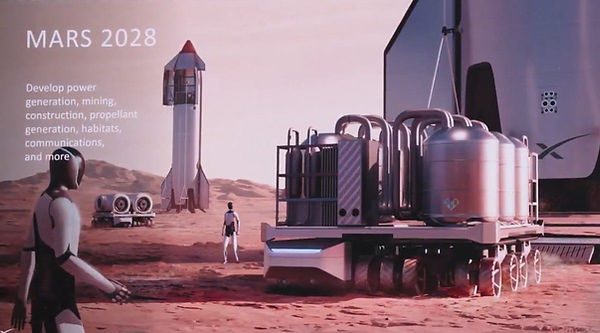
Mars planning.
Orbital refueling.
Starlink deployments.
And now the Super Heavy V3 proving that the next stage of spaceflight is already under construction. (spaceflightnow.com )
The numbers alone are insane.
The full Starship stack stands over 400 feet tall. The booster alone produces enough thrust to make the Saturn V look like it skipped leg day. The V3 upgrades include docking systems and fuel-transfer capability specifically designed for missions beyond Earth orbit. Translation?
They’re not building this thing for low-Earth orbit joyrides.
They’re building it for Mars. (space.com )
And suddenly… that idea doesn’t sound ridiculous anymore.
That’s the biggest change this launch created.
Five years ago, people laughed at Mars colonies. Ten years ago, reusable rockets sounded impossible. Twenty years ago, private companies weren’t even part of serious deep-space conversations.
Now?
People are debating when humans land on Mars instead of if.
That’s a massive psychological shift for humanity.
Kids are watching these launches live online like previous generations watched moon landings on black-and-white television. Entire families are gathering around livestream countdowns. People who never cared about rockets are suddenly learning what orbital refueling means.
The future became cool again.
And maybe that’s the most important thing SpaceX has done.
It made people dream bigger.
The Super Heavy V3 launch wasn’t perfect. There were still failures, adjustments, and lessons learned. But perfection was never the point. Progress was.
And this week?
Progress roared across the Texas sky at Mach speed.
Savtini sees this launch for what it really is:
A turning point.
One of those moments future generations may look back on and say, “That’s when humanity truly started preparing to leave Earth.”
Moon bases suddenly feel believable.
Mars missions feel inevitable.
Deep-space travel feels achievable.
The future stopped looking distant.
It’s standing on the launch pad right now.